Cal Your Friends: When Are We All Free?
· 3 min read
Every group chat eventually has the same thread. Someone suggests getting together, someone asks when, and then everyone starts typing dates back and forth while scrolling their own calendars. A week later, nothing is booked.
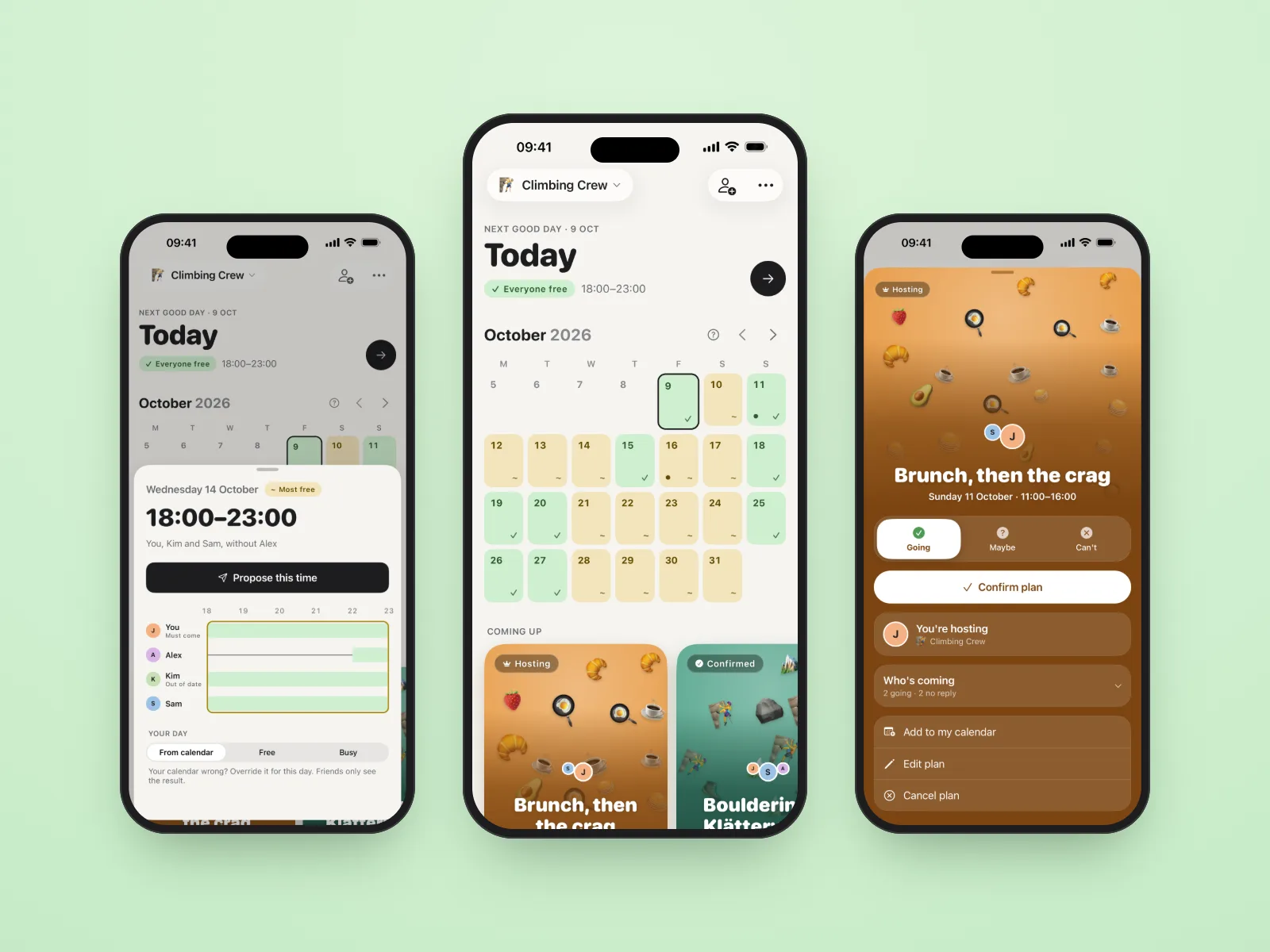
Cal Your Friends is my answer to that thread. Everyone connects their own calendar, the app works out the overlap, and the month turns green on the days that work for the whole group. It's free, it's on the App Store and Google Play, and I made all of it myself — the idea, the design, the app, the backend and the website.
The Promise Comes First
Before any code, I wrote down one rule: your friends see when you're busy, never why.
That rule shaped the architecture. Each phone reads its own calendar on the device, and only busy start and end times ever leave it — titles, locations and attendees stay put. The logic that turns everyone's busy windows into "free", "mostly free" and "busy" lives in one shared TypeScript package with its own tests, so the app and the backend can never disagree about what free means.
The backend is Firebase, with security rules that keep a group's data to its members — tested like the rest of the code, because privacy that isn't tested is just a hope.
A Calendar You Read in a Glance
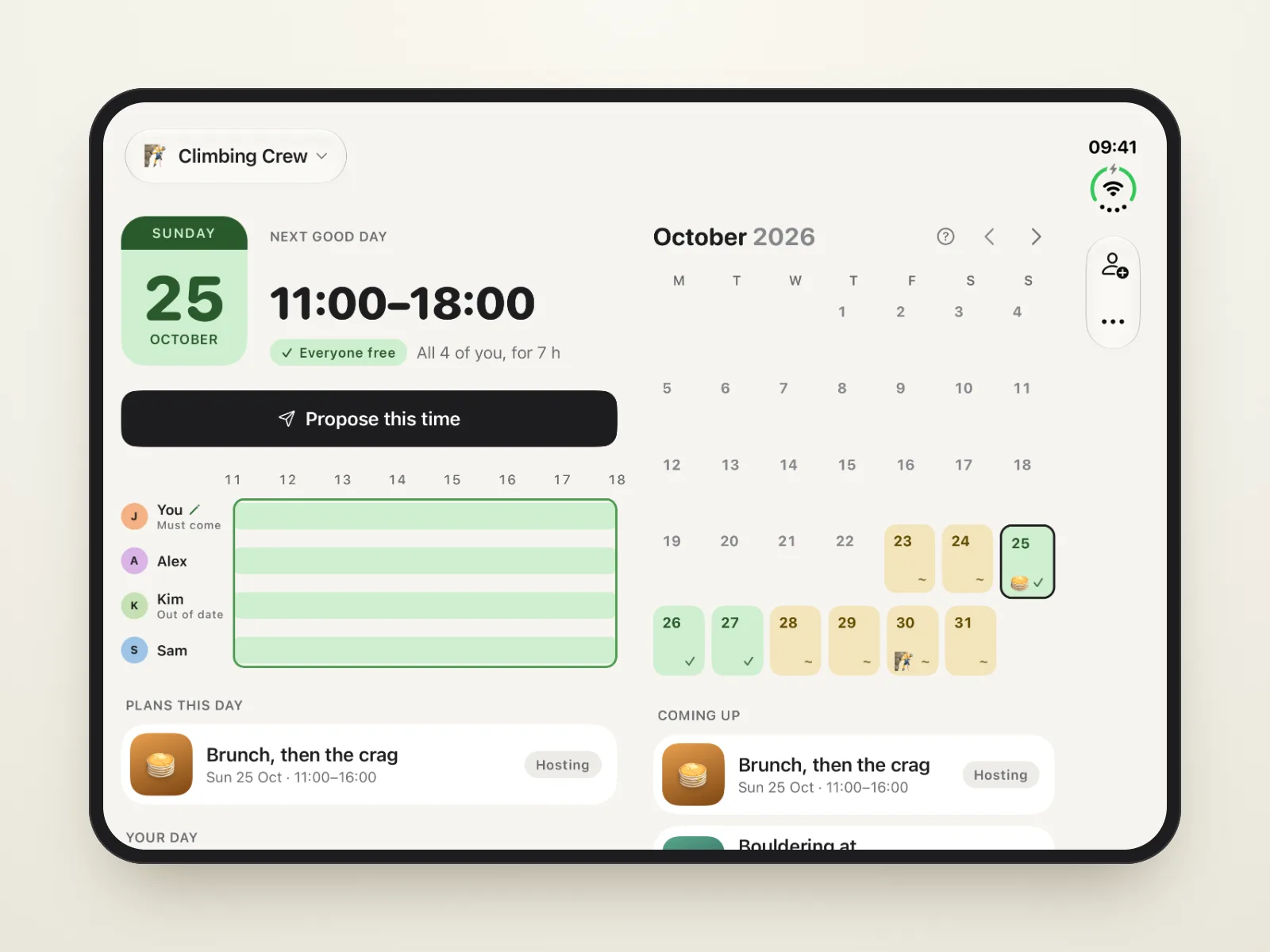
Calendars are dense. This one isn't trying to show you everything, just one thing per day: green when everyone's free, yellow when most are. The next good day is pulled out big at the top, so the answer is the first thing you see.
Plans That Feel Like Invitations
Finding the day is only half the job. Tap "Propose this time" and it becomes a plan with its own art, drawn from the title — brunch gets croissants and coffee, a climbing day gets rocks. Friends answer Going, Maybe or Can't in a tap, from a single link.
I wanted planning to feel like getting invited to something, not like filling in a form.
The Native Details
React Native with Expo got me to iPhone, iPad and Android from one codebase. But the details that make an app feel at home were native work: a SwiftUI widget for the Home and Lock Screen, a two-page planner layout on iPad, and respect for the system's text size, Dark Mode and Reduce Motion settings.
There are nudges, but they're capped at three a day and they go quiet at night.
What I Took With Me
Building alone means every decision is yours — including the unglamorous ones, like store listings and privacy labels, that nobody sees and everybody needs.
And writing the privacy promise first made a hundred later decisions easy. Whenever I wasn't sure about a feature, I checked it against that one sentence.